

The Microbiome in Balance: What It Does and What Happens When It Isn't
Written by: Jose Guizar Real, MSc
Reviewed by: Yiming (Amy) Qin, PhD, RD
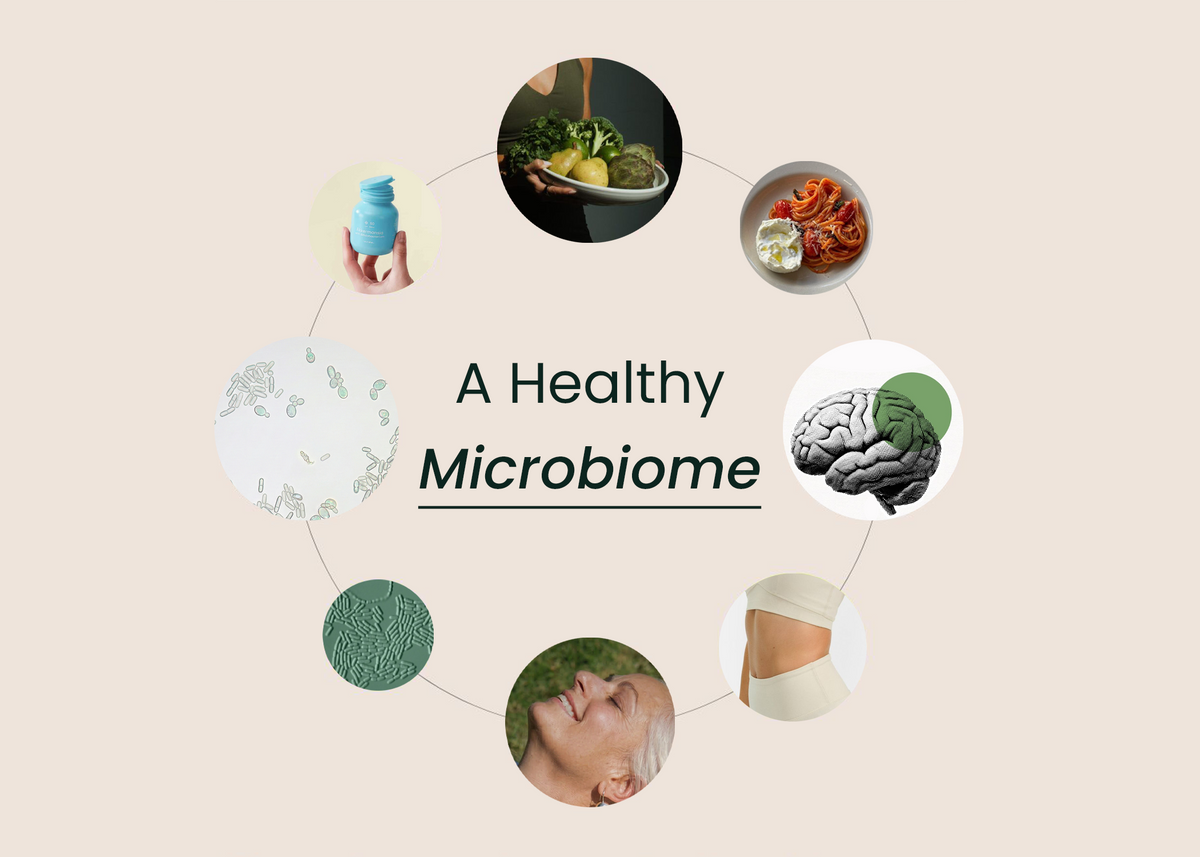
The gut microbiome is the community of trillions of microorganisms living in the digestive tract that collectively produce vitamins, regulate immune responses, maintain the gut lining, and communicate with the brain. A healthy microbiome is not simply the absence of harmful bacteria. It is an actively functioning ecosystem where beneficial species outnumber opportunistic ones; diversity is high, and the community is producing the compounds the body depends on. When that balance shifts, the consequences extend well beyond digestion.
What Does a Healthy Microbiome Actually Do
A well-balanced microbiome is one of the busiest systems in the body. Its functions span multiple organ systems simultaneously.
Gut bacteria synthesize vitamins including B12, K2, and folate. They ferment dietary fiber into short-chain fatty acids, particularly butyrate, which serves as the primary fuel for the cells lining the gut wall and plays a direct role in regulating immune responses.¹ A significant proportion of the body's immune cells reside in and around the gut, and the microbiome communicates with them continuously, helping calibrate whether the immune system responds strongly or stays quiet.
Perhaps the most overlooked function is what specific bacteria do for the gut lining itself. The gut is protected by a two-layer mucus system. The outer layer is colonized by beneficial bacteria that actively maintain it. Akkermansia muciniphila, a bacterium that lives specifically in the mucus layer, produces compounds that support mucus renewal and barrier integrity.² Faecalibacterium prausnitzii, one of the most abundant beneficial bacteria in a healthy gut, and Roseburia intestinalis, a key butyrate producer, directly fuel and protect the lining cells underneath.³·⁴
The microbiome also produces neurotransmitters and signaling molecules that travel to the brain through the vagus nerve, influencing mood, stress response, focus, and sleep.¹⁴ A balanced microbiome keeps this communication running as it should. A disrupted one changes what signals are being sent.
For a deeper look at the gut lining and what happens when it is compromised:
What Is Dysbiosis and How Does It Develop
Dysbiosis is the clinical term for a microbial imbalance in which the community has shifted in a direction that works against the body rather than with it. It is not a single event. It is a gradual process: beneficial strains declining, opportunistic ones gaining ground, and the diversity that makes the ecosystem resilient slowly eroding.
At the center of this shift is diversity loss. A healthy microbiome contains hundreds of different bacterial species, each playing a distinct role. Research involving over 10,000 participants found that people who consumed more than 30 different plant foods per week had significantly greater microbial diversity than those who ate fewer than 10.⁵ When diversity declines, the ecosystem becomes less capable and less stable. Fewer species means fewer functions.
As beneficial bacteria decline, opportunistic species fill the space. Bacteria from the Proteobacteria family, which includes strains that produce inflammatory signals, tend to expand when beneficial bacteria lose ground. Their overgrowth is one of the most consistent markers found in dysbiotic gut environments.⁶
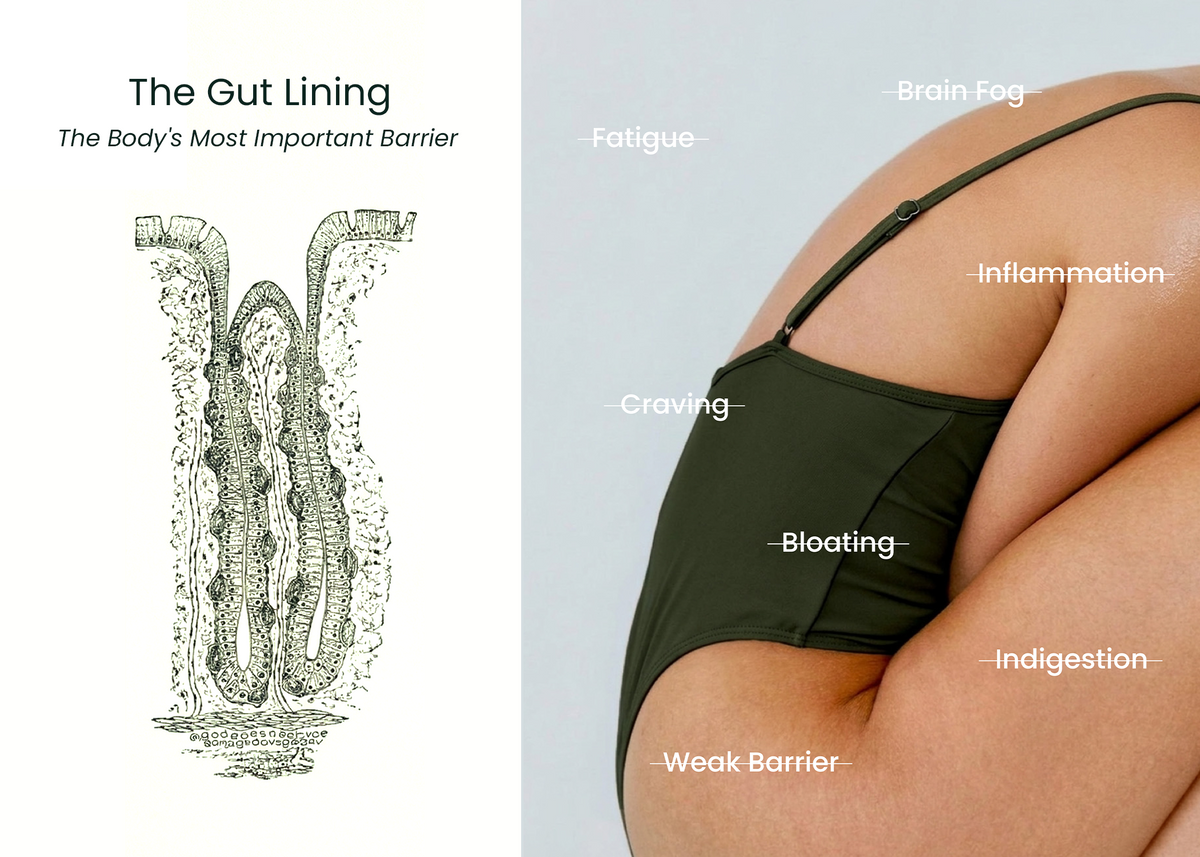
When the bacteria that maintain the mucus layer decline, the outer layer thins and the inner layer becomes vulnerable, leaving the gut lining cells in direct contact with contents that should have stayed further away. The immune system responds. Inflammation follows.
For a deeper look at how inflammation originates in the gut and what drives it:
What Are the Most Common Causes of Dysbiosis
Four factors consistently appear across research as the primary drivers of microbial imbalance:
Diet low in fiber and high in processed foods
Fermentable fiber is the primary food source for beneficial bacteria. A diet low in fiber starves the strains most associated with gut lining maintenance and butyrate production. Certain emulsifiers common in ultra-processed foods have also been associated with direct disruption of the mucus layer.⁷
Chronic stress
Cortisol, the body's primary stress hormone, has been associated with reduced microbial diversity and increased intestinal permeability. The gut-stress relationship runs in both directions: a dysbiotic gut also changes what signals are sent back to the brain, influencing how the body experiences and responds to stress.⁸
Disrupted sleep
Even short-term sleep disruption measurably alters microbiome composition. In one study, two nights of partial sleep deprivation were sufficient to produce detectable shifts in microbial populations.⁹
Antibiotic use
A single course of antibiotics can alter microbial composition for months, and in some individuals, years.¹⁰⁻¹¹ This is not an argument against antibiotics when they are medically necessary. It is a reason to actively support the microbiome during and after their use.
What Does Dysbiosis Actually Cause
The consequences of dysbiosis extend well beyond digestive discomfort, which is precisely why it so often goes unrecognized.
A compromised gut lining allows bacterial compounds called lipopolysaccharides, produced by opportunistic bacteria, to pass into the bloodstream. The immune system responds with an inflammatory signal. When this happens occasionally, the body manages it without difficulty. When it happens persistently, low-grade systemic inflammation becomes the baseline state, with documented associations with metabolic dysfunction, mood disorders, and immune dysregulation.¹²
The microbiome also plays a direct role in how the body processes energy. Dysbiosis alters the efficiency of nutrient metabolism, influences appetite signaling, and affects insulin sensitivity. Research has shown that two people eating identical meals can experience meaningfully different metabolic responses based on microbiome composition alone.¹³
Gut-brain communication through the vagus nerve depends on the microbiome functioning correctly. Dysbiosis disrupts the neurotransmitters and signaling molecules behind this pathway, with documented associations between reduced diversity and increased anxiety, depressive symptoms, and cognitive fog.¹⁴
Which Bacteria Matter Most and Why
Not all bacteria contribute equally. Research has identified several keystone species whose presence or absence has an outsized effect on overall microbiome health.
|
Bacterial strain
|
Primary role
|
Associated with
|
|
Akkermansia muciniphila
|
Mucus layer maintenance, barrier integrity
|
Metabolic health, GLP-1 signaling
|
|
Faecalibacterium prausnitzii
|
Butyrate production, anti-inflammatory signaling
|
Gut lining integrity, immune regulation
|
|
Roseburia intestinalis
|
Butyrate production from dietary fiber
|
Gut barrier support, reduced inflammation
|
|
Bifidobacterium species
|
Fiber fermentation, short-chain fatty acid production
|
Immune regulation, pathogen competition
|
|
Lactobacillus species
|
Lactic acid production, pathogen competition
|
Digestive comfort, gut barrier health
|
|
Proteobacteria (opportunistic)
|
Inflammatory compound production when overgrown
|
Marker of dysbiosis when elevated
|
How Do You Support and Protect Microbiome Balance
The same factors that drive dysbiosis point directly to what supports balance. The evidence converges on four areas:
Dietary variety and prebiotic fiber
The microbiome mirrors the variety of your diet. Different plant foods feed different bacterial species. Fermentable prebiotic fibers, found in oats, leeks, garlic, chicory, and legumes, specifically feed the bacteria most associated with mucus layer maintenance, butyrate production, and immune regulation. Strains like Faecalibacterium prausnitzii and Roseburia intestinalis are particularly supported by the fiber found in these foods.¹⁵
Supporting the mucus layer directly
Akkermansia muciniphila populations appear to be supported by plant compounds called polyphenols, found in pomegranate, cranberry, green tea, and dark berries. These compounds create a gut environment that favors Akkermansia growth and activity, supporting the mucus layer from within.¹⁶
Managing the four disruption factors
Chronic stress, disrupted sleep, antibiotic use, and highly processed diets are the four most documented sources of dysbiosis. Consistently managing any of these gives the microbiome the conditions it needs to maintain its own balance.
Consistency over intensity
The microbiome responds to regular daily inputs more than to short-term interventions. Small, consistent choices in diet, sleep, and stress management compound in ways that occasional concentrated efforts do not.
Healthy Microbiome vs. Dysbiosis: What Changes and Why It Matters
|
Factor
|
Healthy microbiome
|
Dysbiotic state
|
|
Microbial diversity
|
High: hundreds of species, each with distinct roles
|
Low: fewer species, reduced functional capacity
|
|
Mucus layer
|
Maintained by Akkermansia and other keystone species
|
Thinned as mucus-maintaining bacteria decline
|
|
Butyrate production
|
Adequate: fuels gut lining cells and immune regulation
|
Reduced: gut lining cells undernourished
|
|
Gut barrier integrity
|
Intact: selective filtering of nutrients
|
Compromised: increased passage of lipopolysaccharides into circulation
|
|
Immune calibration
|
Accurate: appropriate threat signals
|
Disrupted: inflammatory signaling increases
|
|
Gut-brain signaling
|
Stable: supports mood and stress resilience
|
Altered: associations with anxiety, low mood, and cognitive fog
|
The Balance Worth Protecting
A healthy microbiome is not a fixed destination. It is a dynamic balance, constantly responding to what you eat, how you sleep, how you manage stress, and what you expose it to. It can shift toward dysbiosis gradually and without obvious signals. It can also recover, given the right conditions and enough time.
Understanding both sides of that spectrum is the starting point. Knowing what a healthy microbiome does makes its disruption more legible. Knowing what dysbiosis produces makes the case for protecting the balance more concrete.
The microbiome is not fragile. But it responds to how it is treated, and the evidence for what it needs is clearer than most people realize.
Frequently Asked Questions
What is the difference between dysbiosis and a normal microbiome shift?
Some degree of microbial variation is normal. The microbiome changes daily in response to diet, sleep, and stress. Dysbiosis refers to a sustained shift in which opportunistic species have gained ground at the expense of beneficial ones, diversity has meaningfully declined, and the functions the microbiome normally performs, such as butyrate production and mucus layer maintenance, are compromised. It is a matter of degree and persistence rather than any single change.
Can the microbiome recover after antibiotics or illness?
Research shows the microbiome can recover, but the timeline varies significantly between individuals. Some studies show partial recovery within weeks; others document altered composition for months to years following a single antibiotic course.¹⁰·¹¹ Active support through dietary diversity, prebiotic fiber, and where appropriate, targeted probiotic or synbiotic supplementation, appears to support faster and more complete recovery than no intervention.
Do probiotic supplements restore a disrupted microbiome?
Not permanently, and not by themselves. Most probiotic strains do not establish lasting colonization. They interact with the existing ecosystem during transit and gradually decline once supplementation stops. Their value lies in what they do during that time: competing with opportunistic bacteria, supporting gut barrier integrity, and producing beneficial compounds. They work most effectively as part of a broader approach that includes dietary diversity and prebiotic fiber, not as a standalone fix.
References
-
Canani RB, Costanzo MD, Leone L, et al. Potential beneficial effects of butyrate in intestinal and extraintestinal diseases. World J Gastroenterol. 2011;17(12):1519-1528. doi:10.3748/wjg.v17.i12.1519
-
Derrien M, Vaughan EE, Plugge CM, de Vos WM. Akkermansia muciniphila gen. nov., sp. nov., a human intestinal mucin-degrading bacterium. Int J Syst Evol Microbiol. 2004;54(5):1469-1476. doi:10.1099/ijs.0.02873-0
-
Miquel S, Martín R, Rossi O, et al. Faecalibacterium prausnitzii and human intestinal health. Curr Opin Microbiol. 2013;16(3):255-261. doi:10.1016/j.mib.2013.06.003
-
Duncan SH, Hold GL, Harmsen HJ, Stewart CS, Flint HJ. Roseburia intestinalis sp. nov., a novel saccharolytic, butyrate-producing bacterium from human faeces. Int J Syst Evol Microbiol. 2002;52(5):1615-1620. doi:10.1099/00207713-52-5-1615
-
McDonald D, Hyde E, Debelius JW, et al. American Gut: an open platform for citizen science microbiome research. mSystems. 2018;3(3):e00031-18. doi:10.1128/mSystems.00031-18
-
Rizzatti G, Lopetuso LR, Gibiino G, Boskoski I, Gasbarrini A. Proteobacteria: a common factor in human diseases. Biomed Res Int. 2017;2017:9351507. doi:10.1155/2017/9351507
-
Chassaing B, Koren O, Goodrich JK, et al. Dietary emulsifiers impact the mouse gut microbiota promoting colitis and metabolic syndrome. Nature. 2015;519(7541):92-96. doi:10.1038/nature14232
-
Madison A, Kiecolt-Glaser JK. Stress, depression, diet, and the gut microbiota: human-bacteria interactions at the core of psychoneuroimmunology and nutrition. Curr Opin Behav Sci. 2019;28:105-110. doi:10.1016/j.cobeha.2019.01.011
-
Benedict C, Vogel H, Jonas W, et al. Gut microbiota and glucometabolic alterations in response to recurrent partial sleep deprivation in normal-weight young individuals. Mol Metab. 2016;5(12):1175-1186. doi:10.1016/j.molmet.2016.10.003
-
Jernberg C, Löfmark S, Edlund C, Jansson JK. Long-term ecological impacts of antibiotic administration on the human intestinal microbiota. ISME J. 2007;1(1):56-66. doi:10.1038/ismej.2007.3
-
Dethlefsen L, Relman DA. Incomplete recovery and individualized responses of the human distal gut microbiota to repeated antibiotic perturbation. Proc Natl Acad Sci USA. 2011;108(suppl 1):4554-4561. doi:10.1073/pnas.1000087107
-
Cani PD, Amar J, Iglesias MA, et al. Metabolic endotoxemia initiates obesity and insulin resistance. Diabetes. 2007;56(7):1761-1772. doi:10.2337/db06-1491
-
Turnbaugh PJ, Ley RE, Mahowald MA, Magrini V, Mardis ER, Gordon JI. An obesity-associated gut microbiome with increased capacity for energy harvest. Nature. 2006;444(7122):1027-1031. doi:10.1038/nature05414
-
Cryan JF, O'Riordan KJ, Cowan CSM, et al. The microbiota-gut-brain axis. Physiol Rev. 2019;99(4):1877-2013. doi:10.1152/physrev.00018.2018
-
Deehan EC, Yang C, Perez-Muñoz ME, et al. Precision microbiome modulation with discrete dietary fiber structures directs short-chain fatty acid production. Cell Host Microbe. 2020;27(3):389-404. doi:10.1016/j.chom.2020.01.006
-
Anhê FF, Roy D, Pilon G, et al. A polyphenol-rich cranberry extract protects from diet-induced obesity, insulin resistance and intestinal inflammation in association with increased Akkermansia spp. population in the gut microbiota of mice. Gut. 2015;64(6):872-883. doi:10.1136/gutjnl-2014-307142
Quick FAQ
Leer más
GLP-1 is everywhere right now, but many forget a crucial fact: your body naturally produces it. This guide explores how specialized L-cells in your gut release GLP-1 and how you can naturally suppo...
Your gut is responsible for much more than digestion. This comprehensive guide explores how the 38 trillion microorganisms in your microbiome influence your mood, energy, skin, and immune system. L...
Dejar un comentario
Todos los comentarios se revisan antes de su publicación.
Este sitio está protegido por hCaptcha y se aplican la Política de privacidad de hCaptcha y los Términos del servicio.