



Written by: Jose Guizar Real, MSc
Reviewed by: Yiming (Amy) Qin, PhD, RD
When you cut your finger, the area turns red and swells. That is not something going wrong. That is your immune system doing exactly what it should: recognizing a threat, sending immune cells to the site, and defending it. When the job is done, it stands down. The redness fades. The swelling goes. The body moves on.
When Inflammation Is Your Friend
Not all inflammation is the same. There is a version that is fast, focused, and completely intentional: the kind your body triggers when it detects a genuine threat. This is what researchers call acute inflammation, and it is one of the most important protective mechanisms the body has.
When the body detects danger, whether a bacterial infection, a physical injury, or a foreign substance, it sends immune cells to the site, increases blood flow to the affected area, and begins neutralizing the threat and repairing the damage.
The redness around a cut, the swelling after an injury, the fever during an illness: these are all signs of the immune system doing its job. Uncomfortable in the moment, but purposeful. The response is targeted, temporary, and designed to resolve once the threat is gone.
Think of the immune system like a city's security force. When a real threat appears, the force mobilizes precisely and efficiently, with a clear objective. Once the threat is neutralized, the force returns to patrol. The city is at peace.
When Inflammation Becomes the Problem
The problem starts when the security force never gets to stand down.
The force stays deployed indefinitely. And a force with no defined objective eventually starts doing damage of its own.
The distinction matters because the two states have fundamentally different effects on the body. Acute inflammation resolves and leaves no lasting damage. Chronic low-grade inflammation, running in the background over months and years, has been associated with a wide range of effects on metabolism, mood, immune function, and cardiovascular health.¹·²
Understanding where it tends to originate is where the gut becomes essential to the story.
| Acute inflammation | Chronic inflammation | |
| Trigger | Clear and identifiable | Often unclear or persistent |
| Onset | Fast, within minutes to hours | Gradual, develops over time |
| Duration | Short, resolves when threat is gone | Long-term, months to years |
| Symptoms | Visible: redness, swelling, fever | Often invisible: fatigue, brain fog, low mood |
| Purpose | Protective and necessary | Damaging when sustained |
| Resolution | Natural, self-limiting | Requires addressing the root cause |
How the Gut Microbiome Keeps the Security Force Informed
Most people think of the immune system as something distributed evenly throughout the body. In reality, approximately 70% of the body's immune cells are concentrated in and around the gut.³
This makes biological sense. The gut is the body's largest point of contact with the outside world. Food, bacteria, and environmental substances pass through it continuously. The immune system needs to be present there in force because that is where the most consequential decisions get made: what to absorb, what to respond to, and what to let pass.
The gut microbiome plays a direct role in calibrating these decisions. Beneficial bacteria communicate continuously with the immune cells surrounding them, helping the immune system distinguish between a genuine threat and something harmless. Think of them as the city's intelligence network, feeding the security force reliable information about what requires a response and what does not. A diverse, well-balanced microbiome helps the immune system read threats accurately and calibrate its response.⁴
When that microbial balance shifts, the intelligence breaks down. And a security force working with inaccurate information tends to overreact.
For a deeper look at what a balanced microbiome does and what happens when it is disrupted:
How a Leaky Gut Keeps the Alarm Running
The gut lining is the city wall. When it is intact, it keeps the security force's job manageable. When it is not, compounds called lipopolysaccharides, or LPS, slip from the gut into the bloodstream. The immune system reads this as a threat and responds accordingly. The force mobilizes. And because the trigger never stops coming, it never stands down.⁵
This is one of the most direct connections between gut health and chronic inflammation. Not a dramatic event. Just a persistent, low-level signal that keeps the security force deployed when it should be at peace.
For a full look at the gut lining, what damages it, and what supports it:
Four Things That Keep Chronic Inflammation Going
Most of the time chronic inflammation is not caused by one dramatic event. It is fed quietly, by everyday factors that seem unrelated to the immune system until you understand the gut connection.
-
Diet. A gut fed on low-fiber, processed foods loses the bacterial diversity that keeps the security force calibrated. Without that calibration, the immune system starts overreacting to signals it would normally ignore. Research involving over 10,000 participants found that people eating more than 30 different plant foods per week had significantly greater microbial diversity than those eating fewer than 10.⁶ That is not a target to hit perfectly. It is a direction to move in.
-
Chronic stress. Cortisol does not just affect mood. It directly alters the gut microbiome and changes how immune cells behave, pushing the security force toward a state of persistent readiness it cannot easily switch off.⁷ The relationship runs in both directions: a disrupted gut also changes the signals sent back to the brain, making stress harder to regulate. The loop amplifies in both directions.
-
Disrupted sleep. Research has found that even two nights of partial sleep deprivation can produce subtle but detectable shifts in gut microbiome composition.⁸ A shifted microbiome means changed immune signals. Changed immune signals mean a security force that is harder to stand down. Consistent sleep timing is one of the most underrated levers for immune regulation.
-
Dysbiosis. When the gut microbiome shifts out of balance, a condition researchers call dysbiosis, certain bacteria associated with inflammatory signaling increase in the gut.⁹ The intelligence network starts feeding the security force inaccurate information, and the immune response reflects that.
The Bottom Line: The Gut Is Where Inflammation Starts and Stops
Inflammation is not the enemy. It is one of the body's most important protective mechanisms, the security force doing exactly what it was designed to do.
Frequently Asked Questions
What is the difference between inflammation and infection?
Infection is the presence of a harmful microorganism. Inflammation is the immune system's response to it. You can have inflammation without an active infection, which is exactly what chronic low-grade inflammation is. Not a bug or a virus, just a security force that never got the signal to stand down.
Can you have chronic inflammation without knowing it?
Yes, and most people do. The signs are easy to attribute elsewhere: persistent fatigue, low mood, brain fog, or just a general sense of running below where you should be. Because nothing feels dramatic, it often goes unrecognized for months or years.
Does an anti-inflammatory diet actually work?
Research supports dietary patterns high in fiber and plant diversity as associated with lower inflammation markers, primarily through their effects on the gut microbiome.⁴·⁶ No single food is a fix. But consistent dietary diversity, maintained over time, is one of the most documented levers available.
References
-
Furman D, Campisi J, Verdin E, et al. Chronic inflammation in the etiology of disease across the life span. Nat Med. 2019;25(12):1822-1832. doi:10.1038/s41591-019-0675-0
-
Milaneschi Y, Kappelmann N, Ye Z, et al. Association of inflammation with depression and anxiety: evidence for symptom-specificity and potential causality from UK Biobank and NESDA cohorts. Mol Psychiatry. 2021;26(12):7393-7402. doi:10.1038/s41380-021-01188-w
-
Vighi G, Marcucci F, Sensi L, Di Cara G, Frati F. Allergy and the gastrointestinal system. Clin Exp Immunol. 2008;153(suppl 1):3-6. doi:10.1111/j.1365-2249.2008.03713.x
-
Maslowski KM, Mackay CR. Diet, gut microbiota and immune responses. Nat Immunol. 2011;12(1):5-9. doi:10.1038/ni0111-5
-
Cani PD, Amar J, Iglesias MA, et al. Metabolic endotoxemia initiates obesity and insulin resistance. Diabetes. 2007;56(7):1761-1772. doi:10.2337/db06-1491
-
McDonald D, Hyde E, Debelius JW, et al. American Gut: an open platform for citizen science microbiome research. mSystems. 2018;3(3):e00031-18. doi:10.1128/mSystems.00031-18
-
Madison A, Kiecolt-Glaser JK. Stress, depression, diet, and the gut microbiota: human-bacteria interactions at the core of psychoneuroimmunology and nutrition. Curr Opin Behav Sci. 2019;28:105-110. doi:10.1016/j.cobeha.2019.01.011
-
Benedict C, Vogel H, Jonas W, et al. Gut microbiota and glucometabolic alterations in response to recurrent partial sleep deprivation in normal-weight young individuals. Mol Metab. 2016;5(12):1175-1186. doi:10.1016/j.molmet.2016.10.003
-
Rizzatti G, Lopetuso LR, Gibiino G, Boskoski I, Gasbarrini A. Proteobacteria: a common factor in human diseases. Biomed Res Int. 2017;2017:9351507. doi:10.1155/2017/9351507
Quick FAQ
Read more
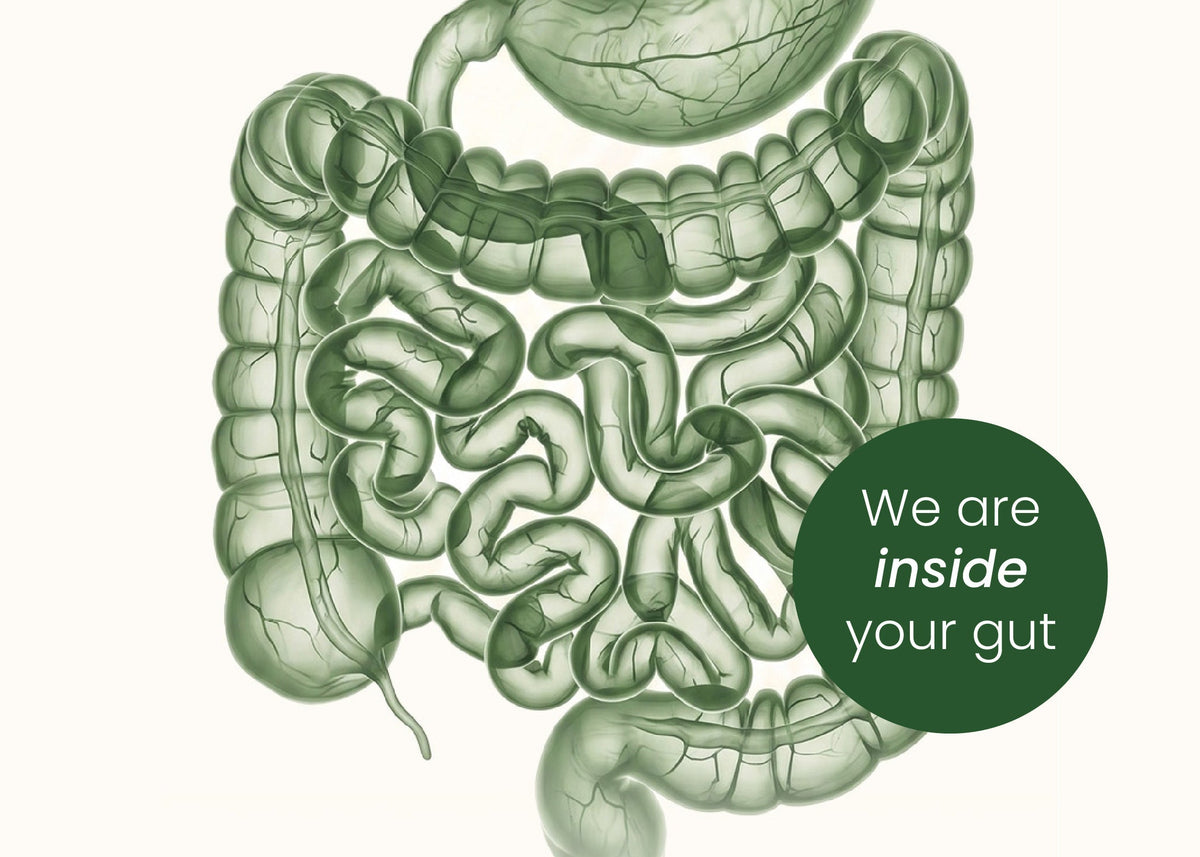
Why is Akkermansia muciniphila widely considered the next-generation star of the microbiome? Unlike standard probiotics that float in the center of the gut, Akkermansia uniquely colonizes the intes...
Most people notice the symptoms long before they connect them to the gut. Bloating that lingers after meals. Fatigue that sleep does not fix. Skin that flares without a clear trigger. A sensitivity...
Leave a comment
All comments are moderated before being published.
This site is protected by hCaptcha and the hCaptcha Privacy Policy and Terms of Service apply.