

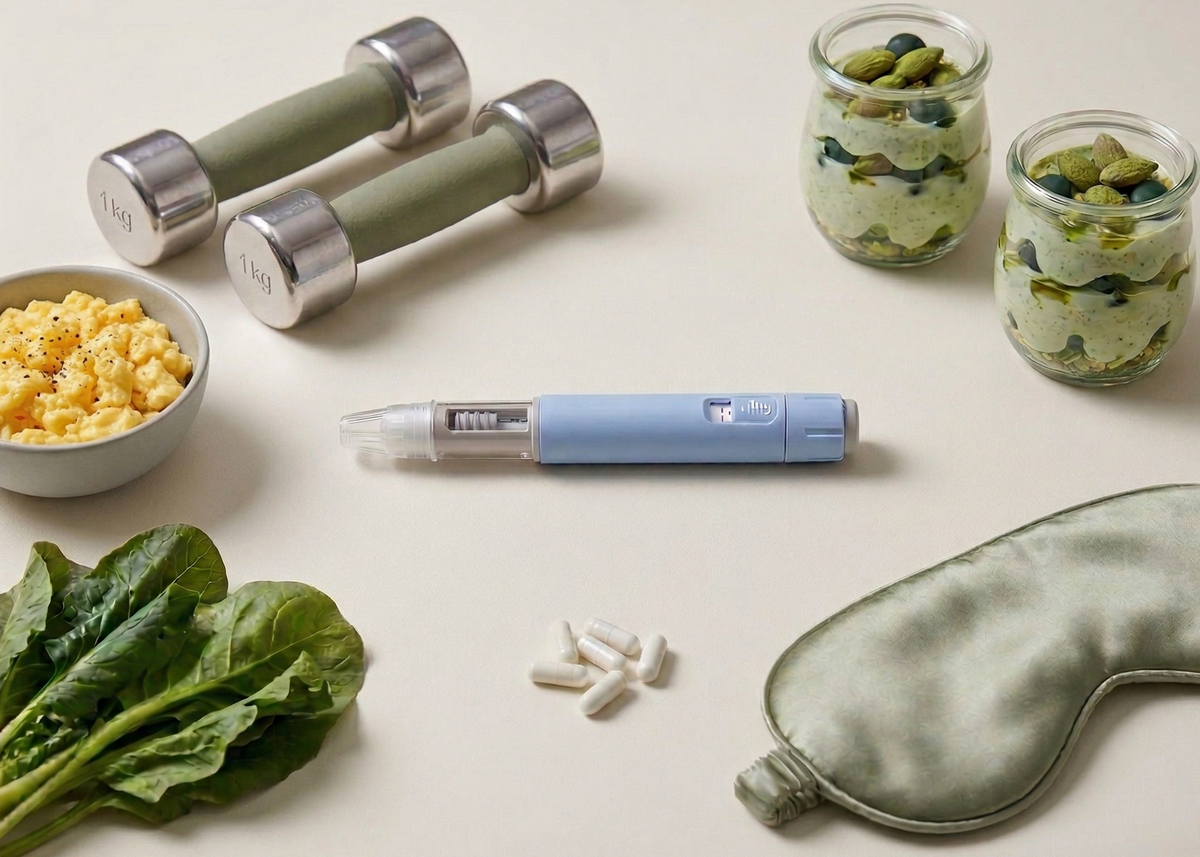
Want to Support GLP-1 Naturally? Start with Food, Sleep, and Gut Health
Written by: Jose Guizar Real, MSc
Reviewed by: Yiming (Amy) Qin, PhD, RD
GLP-1 gets a lot of attention these days, but here is the part many people miss: your body already makes it. Released after you eat, GLP-1 (glucagon-like peptide-1) is a hormone produced by specialized cells in the gut lining called L-cells, the same layer we cover in detail in [The Gut Lining — The Body's Most Important Barrier]. It helps support healthy post-meal blood sugar, slows the rate at which food leaves the stomach, and sends satiety signals to the brain that can help curb appetite.¹ In other words, it is part of your body's natural "I'm satisfied now" signaling system.
Start with Fiber
If there is one place to begin, it is fiber. When gut microbes ferment fiber, they produce short-chain fatty acids (SCFAs), compounds that bind directly to receptors on L-cells and stimulate GLP-1 and PYY secretion.² That makes fiber one of the clearest and most documented links between food, the microbiome, and your body's natural satiety response.
Give Protein a Seat at the Table
Protein does more than build muscle. It also triggers a meaningful gut hormone response after meals. Research in healthy volunteers has shown that high-protein meals stimulate greater GLP-1 and PYY release compared to meals high in carbohydrates or fat alone.³·⁴ A simple rule of thumb: build each meal around a real protein source, whether that is eggs, yogurt, fish, tofu, lean meat, poultry, or legumes. Whatever fits your routine.
Do Not Go Full Low-Fat
Dietary fat also contributes to post-meal gut hormone signaling, particularly when it reaches the small intestine.⁵ Balanced meals work better than extreme ones. Healthy fats from foods like olive oil, nuts, seeds, avocado, and fatty fish fit into a more satisfying, less snacky way of eating. The goal is not dietary drama. The goal is a meal your body can actually work with.
Your Gut Microbiome Matters
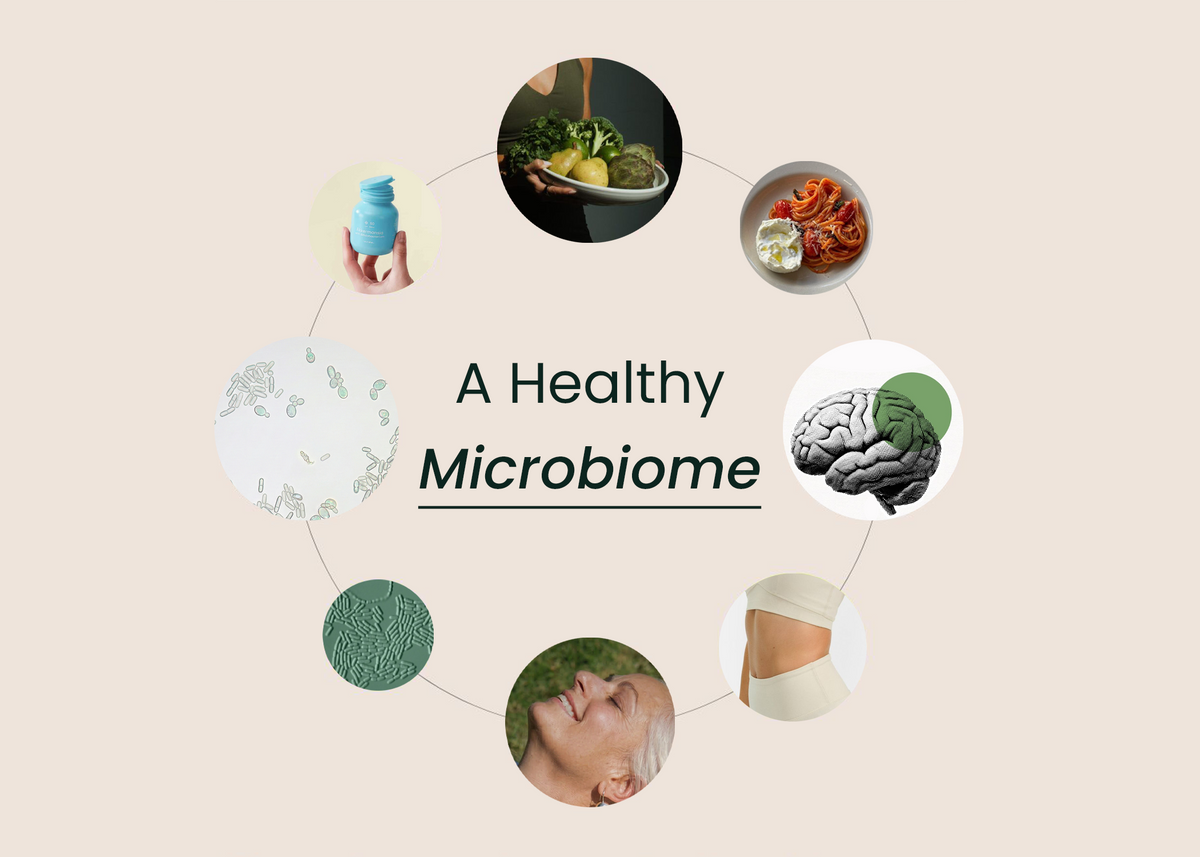
Your gut microbes help turn food into signals. One of the best-documented examples is what happens when they ferment fiber: the SCFAs they produce stimulate L-cells to release GLP-1 and PYY.² A more diverse, fiber-fed microbiome means more of this signaling activity happening after every meal. So yes, gut health is part of the GLP-1 conversation. It is not a side quest.
Akkermansia and GLP-1
Akkermansia muciniphila is one of the most studied bacteria in microbiome research, and its connection to GLP-1 physiology is one of the reasons it has attracted so much attention. Research has identified a protein called P9 secreted by Akkermansia that stimulates L-cells to release GLP-1, and the gut lining integrity Akkermansia helps maintain creates better conditions for L-cell function overall.⁶
Sleep Still Counts
GLP-1 secretion follows a circadian rhythm, meaning it is tied to your body clock and the timing of your sleep-wake cycle.⁸ Research has shown that even a single night of sleep deprivation can delay the timing of the normal post-meal GLP-1 response in healthy adults.⁹ A body running on poor sleep is not exactly set up for its best metabolic rhythm. Food matters, but so do sleep, daily activity, and how you eat. A more balanced lifestyle gives your body better odds of supporting its natural GLP-1 response.
What to Actually Do
Keep it simple:
-
Eat more fiber-rich plants. Beans, oats, garlic, onions, berries, and vegetables all feed the microbes that produce the SCFAs that signal L-cells.
-
Include protein in every meal. It is one of the strongest dietary triggers of post-meal GLP-1 and PYY release.
-
Build balanced meals instead of extreme ones. Fat plays a role in gut hormone signaling too.
-
Support your gut microbiome consistently. Diversity, prebiotic fiber, and conditions that support keystone species like Akkermansia all matter.
-
Sleep like it matters. Because it does.
The Takeaway
Your body already knows how to make GLP-1. The real question is whether your daily habits are giving L-cells the conditions they need to do that job well. A fiber-forward diet, adequate protein, balanced meals, better sleep, and a well-supported gut microbiome can all help create a better environment for natural satiety signaling.
Frequently Asked Questions
What is GLP-1?
A gut hormone released after eating that helps support post-meal blood sugar regulation, slows gastric emptying, and sends fullness signals to the brain. It is produced naturally by L-cells in the gut lining in response to food, microbiome activity, and lifestyle factors.¹
Why is fiber such a big deal?
Because gut microbes ferment fiber and produce short-chain fatty acids that bind directly to receptors on L-cells and stimulate GLP-1 secretion.² More fiber means more of this signaling activity happening after every meal. It is one of the most direct and documented dietary levels available.
Does sleep really affect GLP-1?
Yes. GLP-1 secretion follows a circadian rhythm tied to your body clock.⁸ Research has shown that even a single night of sleep deprivation can delay the timing of the normal post-meal GLP-1 response in healthy adults.⁹ Consistent sleep timing is one of the more overlooked factors in supporting the body's natural metabolic rhythm.
How does Akkermansia connect to GLP-1?
Akkermansia muciniphila secretes a protein called P9 that directly stimulates L-cells to release GLP-1.⁵ It also helps maintain the gut lining integrity that L-cells depend on to function correctly. Clinical research has found that Akkermansia supplementation significantly increased circulating GLP-1 and PYY levels in overweight adults over eight weeks.⁶
Can Akkermansia replace GLP-1 medication?
No. Akkermansia should be understood as nutritional and gut-health support, not a replacement for prescription treatment. The research supports its role as part of a broader lifestyle and gut-health strategy for people looking to support their body's natural GLP-1 response.
References
-
Müller TD, Finan B, Bloom SR, et al. Glucagon-like peptide 1 (GLP-1). Mol Metab. 2019;30:72-130. doi:10.1016/j.molmet.2019.09.010
-
Tolhurst G, Heffron H, Lam YS, et al. Short-chain fatty acids stimulate glucagon-like peptide-1 secretion via the G-protein-coupled receptor FFAR2. Diabetes. 2012;61(2):364-371. doi:10.2337/db11-1019
-
Lejeune MP, Westerterp KR, Adam TC, Luscombe-Marsh ND, Westerterp-Plantenga MS. Ghrelin and glucagon-like peptide 1 concentrations, 24-h satiety, and energy and substrate metabolism during a high-protein diet and measured in a respiration chamber. Am J Clin Nutr. 2006;83(1):89-94. doi:10.1093/ajcn/83.1.89
-
van der Klaauw AA, Giannoudaki M, Keogh JM, et al. High protein intake stimulates postprandial GLP1 and PYY release. Obesity. 2013;21(8):1602-1607. doi:10.1002/oby.20154
-
Zilstorff DB, Richter MM, Hannibal J, et al. Secretion of glucagon, GLP-1 and GIP may be affected by circadian rhythm in healthy males. BMC Endocr Disord. 2024;24:38. doi:10.1186/s12902-024-01566-9
-
Yoon HS, Cho CH, Yun MS, et al. Akkermansia muciniphila secretes a glucagon-like peptide-1-inducing protein that improves glucose homeostasis and ameliorates metabolic disease in mice. Nat Microbiol. 2021;6(5):563-573. doi:10.1038/s41564-021-00880-5
-
Zhu C, Liu Y, Wang Z, et al. Safety and efficacy of a synbiotic formulation containing Akkermansia muciniphila Akk11 on gut microbiota and metabolic health: a randomized controlled trial. Ann Microbiol. 2026;76:8. doi:10.1186/s13213-025-01839-1
-
Liu C, Liu Y, Xin Y, Wang Y. Circadian secretion rhythm of GLP-1 and its influencing factors. Front Endocrinol. 2022;13:991397. doi:10.3389/fendo.2022.991397
-
Benedict C, Barclay JL, Ott V, Oster H, Hallschmid M. Acute sleep deprivation delays the glucagon-like peptide 1 peak response to breakfast in healthy men. Nutr Diabetes. 2013;3(6):e78. doi:10.1038/nutd.2013.20
Dejar un comentario
Todos los comentarios se revisan antes de su publicación.
Este sitio está protegido por hCaptcha y se aplican la Política de privacidad de hCaptcha y los Términos del servicio.