

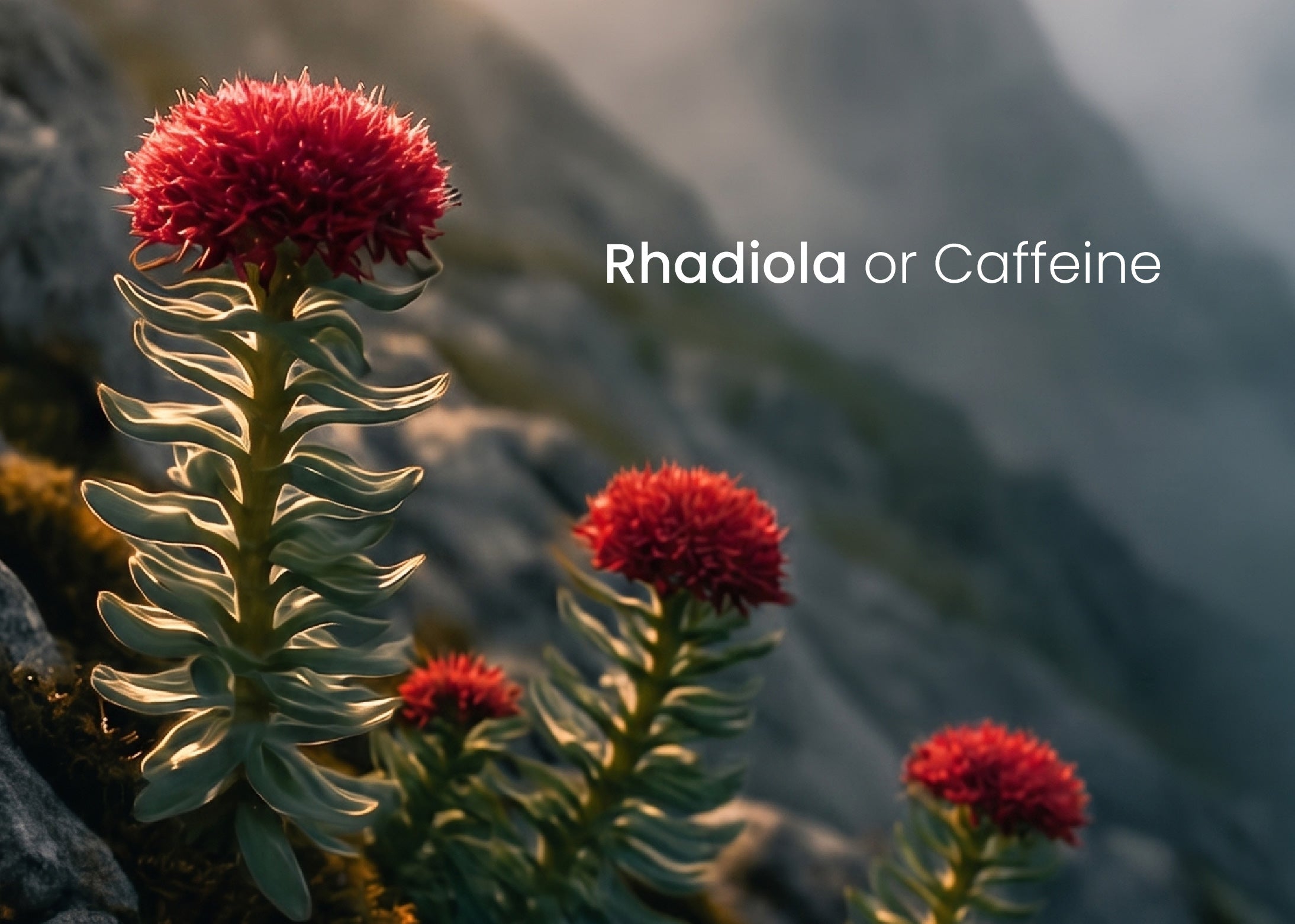
ls Rhodiola a Better Alternative to Caffeine
You have probably seen rhodiola sold as a natural swap for caffeine. The marketing promises energy without the jitters. It tells you to reach for this root instead of a third cup of coffee. It is entirely fair to ask if the plant works. It is even more important to know if it can truly replace your daily espresso.
Where Rhodiola Comes From
Rhodiola rosea thrives where normal plants freeze and die. It grows in dry, brutal, mountainous regions like Siberia and Scandinavia. Surviving these harsh conditions forces the root to build its own internal defense system. That struggle is the short explanation for why the plant is useful to humans.¹
-
It must be safe and non-toxic: It should support your body without causing harsh side effects or altering normal biological functions.⁶
-
It acts as a shield: It works by broadly increasing your body's internal resistance to physical, emotional, and environmental stress.⁶
-
It functions as a thermostat: Instead of forcing a single direction, it focuses on bringing your system back to a steady, balanced state.⁶
The Active Inside It: Salidroside

Rhodiola vs.Caffeine
So, back to the question that brought you here: is rhodiola better than caffeine? The honest answer is that they are not actually competing. They do completely different jobs.
Why Concentration Matters
If you have ever tried a rhodiola supplement and felt absolutely nothing, there is a very simple reason why.
The Honest Verdict
So, should you swap your morning espresso for a rhodiola supplement?
-
Panossian A, Wikman G, Sarris J. Rosenroot (Rhodiola rosea): traditional use, chemical composition, pharmacology and clinical efficacy. Phytomedicine. 2010;17(7):481-493. doi:10.1016/j.phymed.2010.02.002
-
Zhang X, Xie L, Long J, et al. Salidroside: a review of its recent advances in synthetic pathways and pharmacological properties. Chem Biol Interact. 2021;339:109268. doi:10.1016/j.cbi.2020.109268
-
Zhao M, Wu N, Piao Y, et al. Research and development of natural product salidroside: pharmacology, total synthesis and structural modifications. Eur J Med Chem. 2025;300:118186. doi:10.1016/j.ejmech.2025.118186
-
Reichert CF, Deboer T, Landolt HP. Adenosine, caffeine, and sleep-wake regulation: state of the science and perspectives. J Sleep Res. 2022;31(4):e13597. doi:10.1111/jsr.13597
-
Carbone MG, Pagni G, Tagliarini C, et al. Caffeine in aging brains: cognitive enhancement, neurodegeneration, and emerging concerns about addiction. Int J Environ Res Public Health. 2025;22(8):1171. doi:10.3390/ijerph22081171
-
Panossian A, Efferth T, et al. Evolution of the adaptogenic concept from traditional use to molecular mechanisms. Pharmaceuticals. 2021;14(10):1018. doi:10.3390/ph14101018
Quick FAQ
Leer más
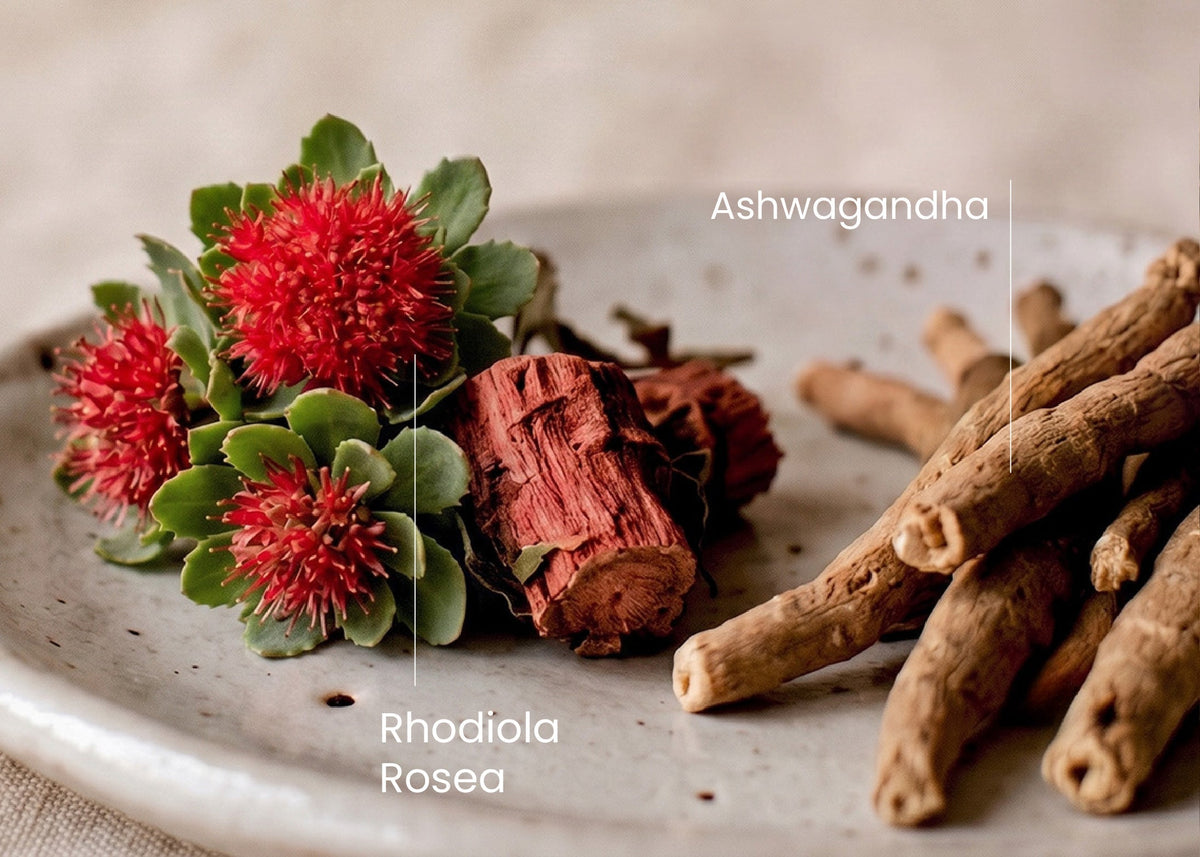
When you are pushing your mind and body to the absolute limit everyday, your body eventually falters and starts demanding help. We normally tell ourselves that is completely normal, a side effect o...
If you train regularly, you already know the work is the easy part to understand. You show up, you push, you get a little fitter. What's less obvious is everything your body does after. A hard sess...
Dejar un comentario
Todos los comentarios se revisan antes de su publicación.
Este sitio está protegido por hCaptcha y se aplican la Política de privacidad de hCaptcha y los Términos del servicio.