

Collagen, Glutathione, NAD+: Supporting Your Skin From the Inside Out
Written by: Jose Guizar Real, MSc
Reviewed by: Yiming (Amy) Qin, PhD, RD
Walk into any pharmacy and you will find an entire aisle dedicated to collagen. Drinks, powders, capsules, creams. The claims are everywhere. But ask most people what collagen actually is, where it lives in the body, or what happens to it as you age, and the answers get vague fast.
Why Most Skin Products Work at the Wrong Level
Your skin has layers, and which layer you are talking about matters more than most people realize.
| Layer | Key components | What it does |
| Epidermis | Keratin | Protective barrier and surface texture. Renews itself every 40 to 56 days, a process that slows with age.³ |
| Dermis | Collagen | Gives skin its firmness and structural strength. Declines by about 1% per year from the mid-20s.² |
| Dermis | Hyaluronic acid | Attracts and holds water, keeping tissue hydrated, cushioned, and plump. Declines steadily with age.¹ |
What Breaks Skin Down Over Time
Skin aging is not one single process. Several different things are working against it at the same time, and they each hit the dermis differently.
-
UV radiation: This is the biggest external factor. Every time we expose ourselves to the sun, enzymes inside our skin start breaking down the collagen in the dermis. Not to mention, it also creates small molecules called free radicals that damage our own skin cells. Studies have shown that up to 80% of visible facial aging comes from UV exposure rather than time alone.⁴
-
Oxidative stress: Think of this as the broader version of UV damage. Free radicals are not just made by the sun. Pollution, chronic stress, poor sleep, and even normal everyday metabolism all produce them too. When the skin cannot neutralize them fast enough, they quietly chip away at collagen and make it harder for skin cells to repair and rebuild.⁵
-
Glycation: This one is less talked about but just as important. Every time there is excess sugar in the bloodstream, some of it sticks to collagen fibers and makes them stiff. The collagen that used to give skin its bounce becomes rigid instead, and that rigidity shows up as reduced elasticity and deeper lines over time.⁶
-
Time itself: This one runs in the background no matter what else you do. From around the mid-20s, the body produces about 1% less collagen every year.² Hyaluronic acid levels in the dermis drop too.¹ The skin gradually becomes thinner, drier, and less able to bounce back from the other three.
The Glutathione Angle: Your Skin's Internal Defense System
You have probably seen the word antioxidant on just about everything. Food labels, supplements, skincare, drinks. It is one of those terms the industry loves but rarely explains.
Things Worth Knowing Before You Buy Anything
Does the collagen I eat actually become collagen in my skin?
Not in the way most people think. When you swallow collagen, your body breaks it down the same way it breaks down any protein, into individual building blocks. None of it travels intact to your skin. What the research does show is that certain collagen peptides can signal the cells in your dermis to start producing more collagen on their own.¹⁰ So it is less like topping up a tank and more like sending a message.
I have been taking collagen for months. Why am I not seeing results?
Usually it is something missing from the picture. Collagen cannot be built without vitamin C. It acts as a direct helper in the process, and without it the body simply cannot form the stable, functional collagen structures required to maintain healthy skin no matter how much collagen you are taking.¹¹ On top of that, things like sun exposure, high sugar intake, and oxidative stress can break collagen down faster than it is being built. If those are not being addressed, the supplement is fighting an uphill battle.
Does hyaluronic acid (HA) in a cream actually hydrate my skin deeply?
Mostly at the surface, and here is why. The HA molecules in most creams are too large to reach the dermis where hyaluronic acid does its structural work.⁹ What you get is surface hydration, which makes skin feel temporarily softer and plumper, but it is not the same as the HA your body produces internally. Oral HA supplementation has shown benefits for skin hydration in clinical trials, and supporting your body's ability to make more of it is a more direct approach than applying it from the outside to the skin.¹
I take glutathione supplements for my skin. Are they working?
Possibly less than you think. Most oral glutathione does not survive the journey through digestion well enough to actually raise your levels in a meaningful way.⁷ NAC is a smarter route because instead of trying to deliver glutathione pre-made and hoping it arrives intact, it gives your cells the raw material to make more of it themselves, which is how the body prefers to work anyway.⁸
Where NAD+ Fits In
Every day, UV radiation, oxidative stress, and normal everyday activity your cells do, create small errors and breaks in the DNA of your skin cells. Your body has repair systems designed to fix this damage before it becomes a problem, and those repair systems run almost entirely on a molecule called NAD+.¹³
Where to Start
Most of what is sold for skin works at the wrong level. The real action is happening deeper, and that is where it makes sense to focus. Supporting skin from the inside is not about finding one miracle ingredient. It is about not leaving gaps.
-
Vitamin C: This is a non-negotiable for collagen synthesis.¹¹ Without it the body cannot complete the process regardless of what else you are taking. It also works alongside glutathione as part of the body's antioxidant network, with each supporting the other's ability to stay active.⁷·¹⁴
-
NAC: This gives the body the raw material it needs to produce glutathione on its own, which is more effective than trying to take glutathione directly.⁸
-
Hyaluronic acid (HA): is best supported from the inside. The HA that actually maintains skin structure and volume is made by your own cells in the dermis, and keeping those cells healthy and nourished is a more direct approach than applying it topically.¹
-
NAD+: Its support helps maintain the cellular energy system that all of these processes depend on, including the repair systems that address daily UV and oxidative damage.¹²·¹³
-
Sun protection: This remains the most evidence-backed single step you can take for preventing visible skin aging.⁴ Everything else works better when UV damage is being limited.
References
-
Karabat MU, Tuncer MC. Effects of hyaluronic acid on skin at the cellular level: a systematic review. Rev Assoc Med Bras. 2025. doi:10.1590/1806-9282.20250208
-
Bar O, Valiukevičienė S. Skin aging and type I collagen: a systematic review of interventions with potential collagen-related effects. Cosmetics. 2025;12(4):129. doi:10.3390/cosmetics12040129
-
Chin T, Lee XE, Ng PY, Lee Y, Dreesen O. The role of cellular senescence in skin aging and age-related skin pathologies. Front Physiol. 2023;14:1297637. doi:10.3389/fphys.2023.1297637
-
Flament F, Bazin R, Laquieze S, Rubert V, Simonpietri E, Piot B. Effect of the sun on visible clinical signs of aging in Caucasian skin. Clin Cosmet Investig Dermatol. 2013;6:221-232. doi:10.2147/CCID.S44686
-
Papaccio F, D'Arino A, Caputo S, Bellei B. Focus on the contribution of oxidative stress in skin aging. Antioxidants. 2022;11(6):1121. doi:10.3390/antiox11061121
-
Choi JY, Ha NG, Lee WJ, Boo YC. Synthetic and natural agents targeting advanced glycation end-products for skin anti-aging: a comprehensive review of experimental and clinical studies. Antioxidants. 2025;14(4):498. doi:10.3390/antiox14040498
-
Stanescu C, Chiscop I, Boev M, Stanescu GD, Matei MN. Glutathione in skin aging and tissue regeneration: a systematic review of molecular mechanisms, redox modulation, and biomedical implications. Molecules. 2026;31(6):981. doi:10.3390/molecules31060981
-
Mokhtari V, Afsharian P, Shahhoseini M, Kalantar SM, Moini A. A review on various uses of N-acetyl cysteine. Cell J. 2017;19(1):11-17. doi:10.22074/cellj.2016.4872
-
Essendoubi M, Gobinet C, Reynaud R, Angiboust JF, Manfait M, Piot O. Human skin penetration of hyaluronic acid of different molecular weights as probed by Raman spectroscopy. Skin Res Technol. 2016;22(1):55-62. doi:10.1111/srt.12228
-
Campos LD, Santos Junior VA, Pimentel JD, Carregã GLF, Cazarin CBB. Collagen supplementation in skin and orthopedic diseases: a review of the literature. Heliyon. 2023;9(4):e14961. doi:10.1016/j.heliyon.2023.e14961
-
Abdullah M, Jamil RT, Attia FN. Vitamin C (ascorbic acid). In: StatPearls. Treasure Island (FL): StatPearls Publishing; 2026. PMID: 29763052
-
Covarrubias AJ, Perrone R, Grozio A, Verdin E. NAD+ metabolism and its roles in cellular processes during ageing. Nat Rev Mol Cell Biol. 2021;22(2):119-141. doi:10.1038/s41580-020-00313-x
-
Katayoshi T, Nakajo T, Tsuji-Naito K. Restoring NAD+ by NAMPT is essential for the SIRT1/p53-mediated survival of UVA- and UVB-irradiated epidermal keratinocytes. J Photochem Photobiol B. 2021;221:112238. doi:10.1016/j.jphotobiol.2021.112238
-
Carr AC, Maggini S. Vitamin C and immune function. Nutrients. 2017;9(11):1211. doi:10.3390/nu9111211
Quick FAQ
Leer más
Something shifts in your 40s that is hard to put into words. Not a single dramatic change, but a gradual accumulation of things that feel slightly off. You are more tired than you used to be. Your ...
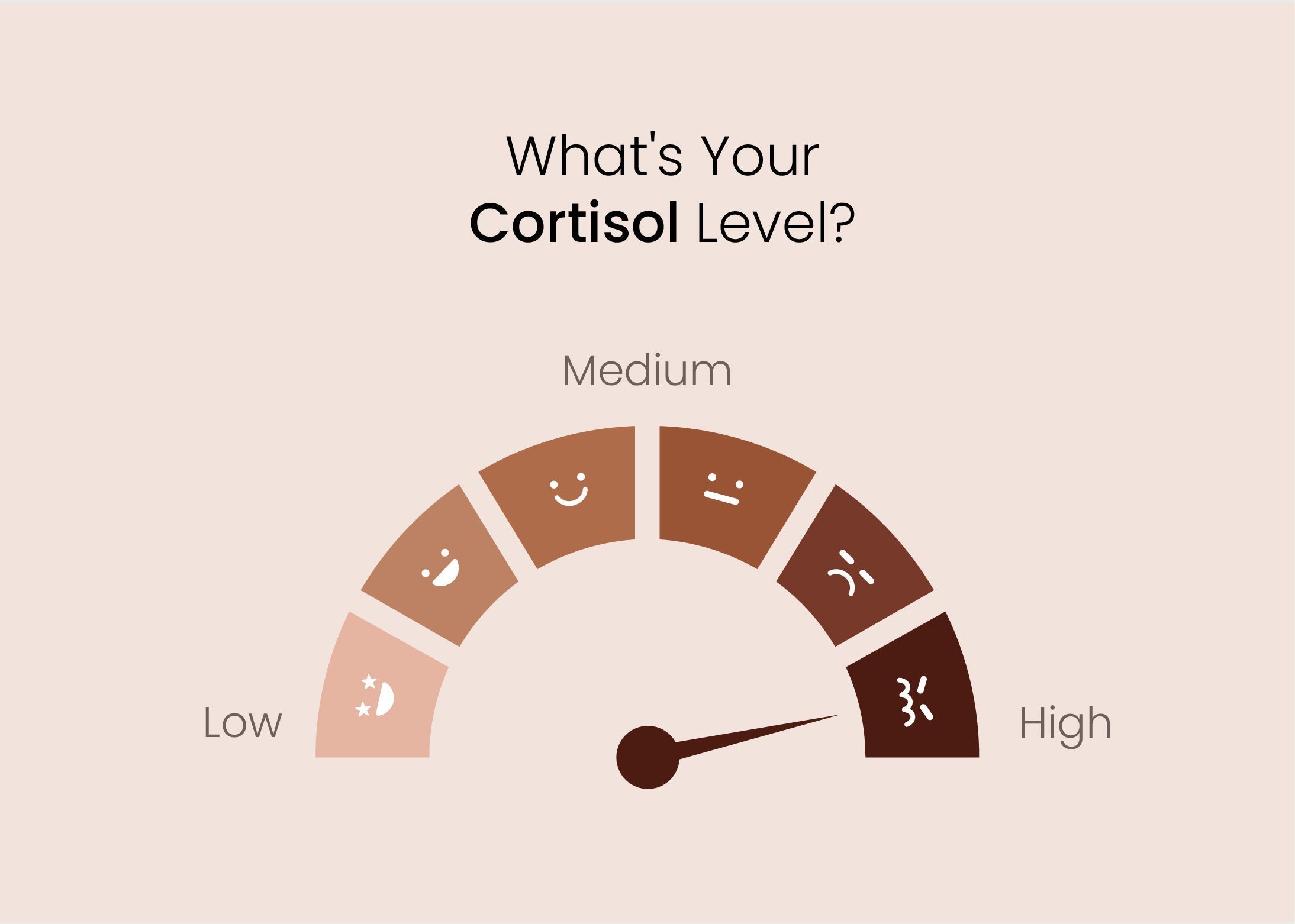
These days, cortisol gets blamed for a lot of things: your belly, your puffy face, your bad sleep, your short fuse. Search it and you'll find a thousand ways to flush it, detox it, or hack it. Some...
Dejar un comentario
Todos los comentarios se revisan antes de su publicación.
Este sitio está protegido por hCaptcha y se aplican la Política de privacidad de hCaptcha y los Términos del servicio.