


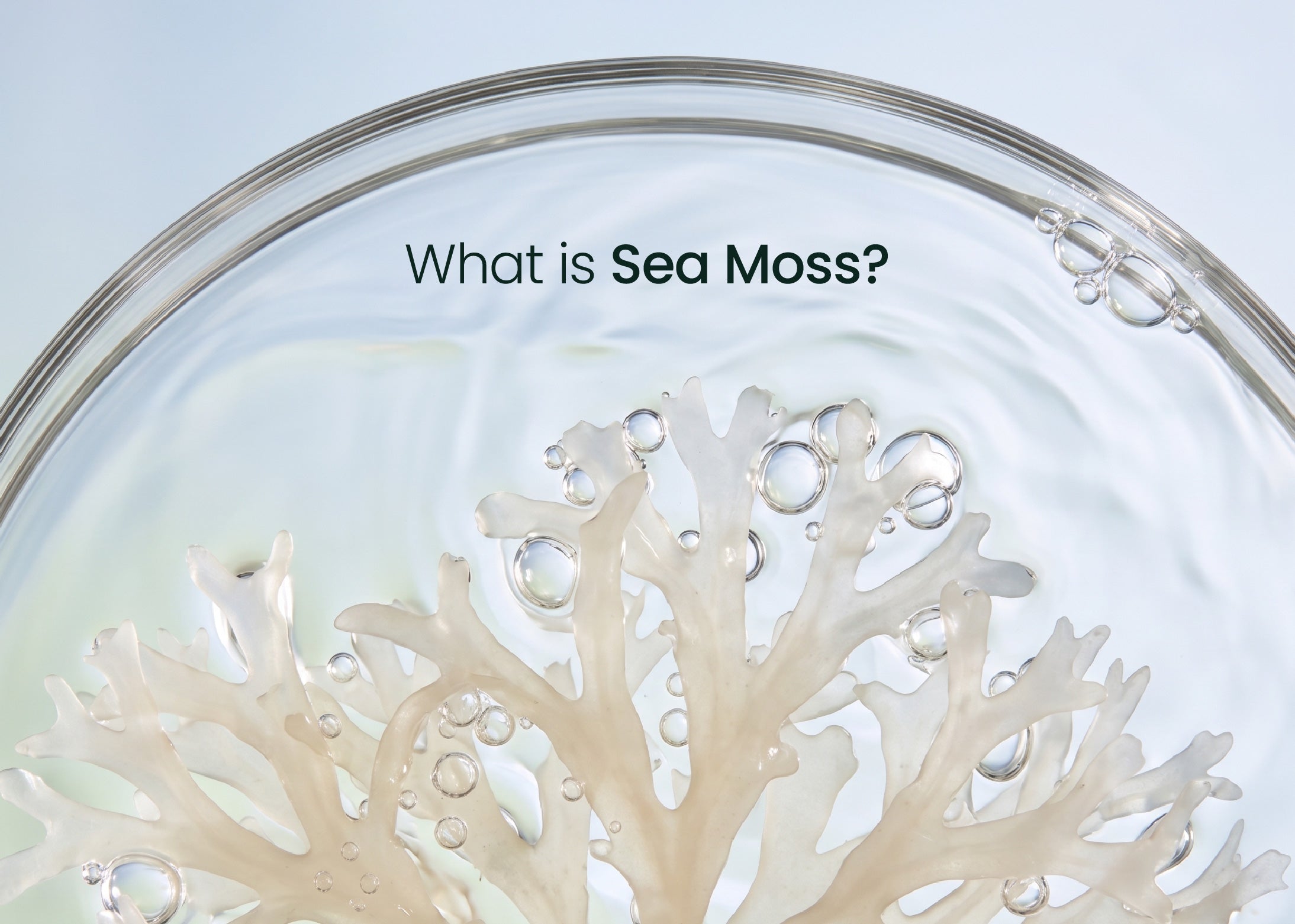
What Sea Moss Can and Can't Do
About that 92-mineral number
Sea moss earns a good part of its reputation. It's a real source of iodine and other minerals, and people have eaten it for generations.
What it has going for it
Here's the good part, and it's real.
-
Iodine. This is the standout. Your thyroid depends on iodine to make the hormones that run your metabolism and keep your body developing and working as it should, and it can't make those hormones without it.⁴ Since your body produces no iodine of its own, you have to get it from food, and sea moss is one of the more natural ways to do that.⁵
-
Everyday minerals. Calcium, iron, manganese, and zinc, the kind of steady, food-level nourishment you'd hope for from a sea vegetable.³
-
Gentle fiber. Most of sea moss is soft, soluble fiber, the kind your gut generally gets along well with.⁶
The iodine catch
Remember how iodine was the best thing sea moss had going for it? It's also the one you can get too much of.
Who should check first
Sea moss is fine for most people. A few of us should check with a doctor first, and it comes back to the iodine.
-
If you take thyroid medication. Iodine feeds the thyroid directly, so add sea moss only after your doctor says it's fine.⁵
-
If you're pregnant or breastfeeding. Your iodine balance matters more than usual, so check with your doctor before adding sea moss.⁴
-
If you already get plenty of iodine. Between iodine supplements and regular seaweed, it adds up, and sea moss adds more.⁵
Where that leaves us
If sea moss has a place in your routine, this is how we make ours, no big promises, just the sea moss done right with extra ingredients to support overall health.
References
-
Collen J, Cornish ML, Craigie J, et al. Chondrus crispus: a present and historical model organism for red seaweeds. Adv Bot Res. 2014;71:53-89. doi:10.1016/B978-0-12-408062-1.00003-2
-
Lahhob Q, Al-Sanaf E, Mohammed Y, et al. Mineral and trace elements, dietary sources, biological effects, deficiency, and toxicity: a review. Eurasian Chem Commun. 2023;5:536-555. doi:10.22034/ecc.2023.381964.1594Smaller open-access journal; cited only for the general classification of essential minerals.
-
Čmiková N, Kowalczewski PŁ, Kmiecik D, et al. Seaweed nutritional value and bioactive properties: insights from Ascophyllum nodosum, Palmaria palmata, and Chondrus crispus. Life (Basel). 2024;14(11):1522. doi:10.3390/life14111522
-
Delić T, Karanović Štambuk S. Iodine in health and disease: a comprehensive review. Nutrients. 2026;18(8):1262. doi:10.3390/nu18081262
-
Darias-Rosales J, Rubio C, Gutiérrez ÁJ, et al. Risk assessment of iodine intake from the consumption of red seaweeds (Palmaria palmata and Chondrus crispus). Environ Sci Pollut Res Int. 2020;27(36):45737-45741. doi:10.1007/s11356-020-10478-9
-
Liu J, Kandasamy S, Zhang J, et al. Prebiotic effects of diet supplemented with the cultivated red seaweed Chondrus crispus or with fructo-oligo-saccharide on host immunity, colonic microbiota and gut microbial metabolites. BMC Complement Altern Med. 2015;15:279. doi:10.1186/s12906-015-0802-5Animal (rat) study; two authors affiliated with a commercial seaweed company (Acadian Seaplants).
Quick FAQ
Read more

We were fine this morning. Focused, even. Then somewhere after lunch it hits: our eyes get heavy, our thoughts go slow, and getting anything done feels like walking through a swamp. This is the aft...
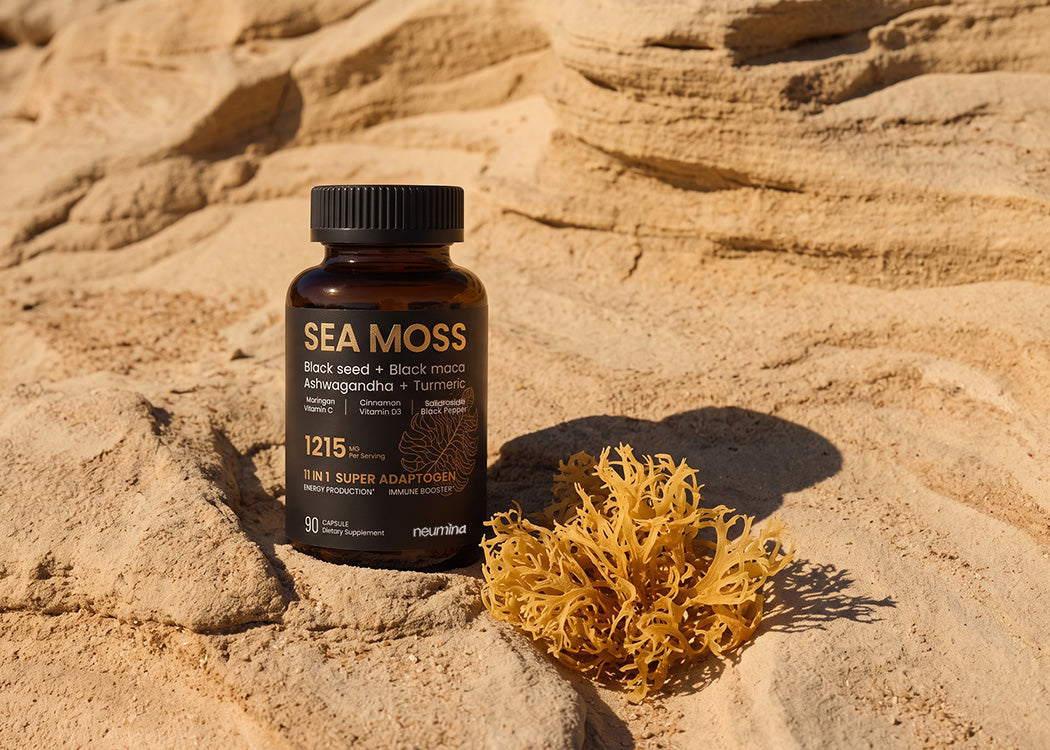
Scan the ingredient list on almost any new supplement and there's a good chance sea moss is on it. It went from a Caribbean folk remedy to something in half the capsules on the shelf, and there's a...
Leave a comment
All comments are moderated before being published.
This site is protected by hCaptcha and the hCaptcha Privacy Policy and Terms of Service apply.